“Dennard is a deeply attuned, empathetic and present therapist. I recommend him especially to anyone wanting to work through trauma, addiction or emotional-regulation challenges.”Stephanie SmileyClinical Social Work/Therapist, LCSW
About Dennard
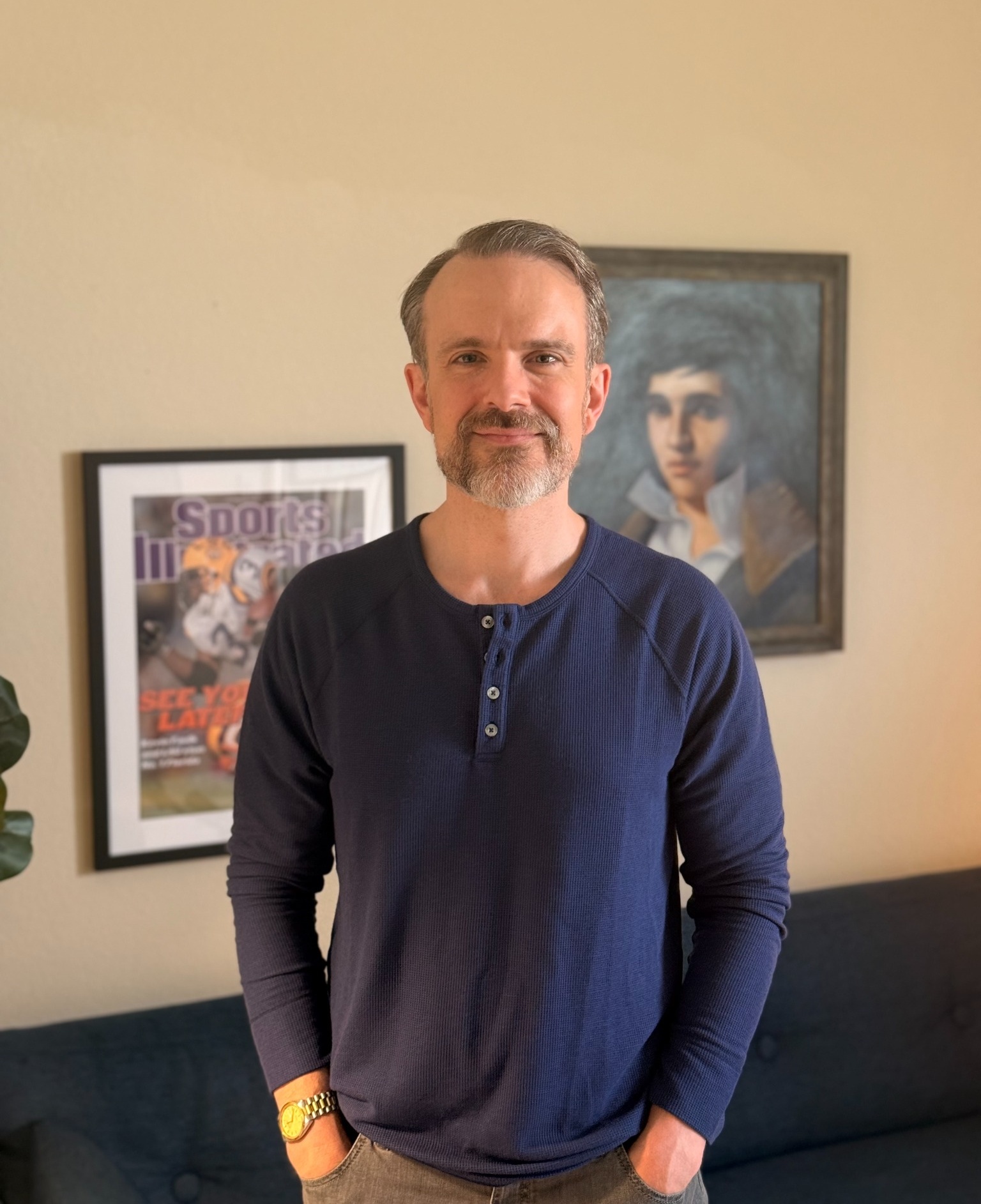
Meet Dennard McInnis, LCSW-S.
I'm Dennard McInnis, a Licensed Clinical Social Worker and founder of McInnis Mental Health. I work primarily with men, young adults, and older teens who keep finding themselves in patterns they understand but haven't been able to change.
I don't start by asking what's wrong with you. I want to understand how what you're doing came to make sense. Then we figure out whether it still does.
Approach
How I work
My style is active, curious, and direct. I don't think therapy should be an hour of explaining your life while I occasionally nod and ask how something made you feel.
We'll pay attention to what's actually happening in your life and what you do when it happens. I'll ask questions, tell you what I'm noticing, and challenge you when I think something doesn't add up.
People rarely change because someone explains their problem more clearly. They change when they do something different and reality gives them new evidence.
Sometimes that means understanding something differently. Sometimes it means doing something differently and seeing what happens.
Clients
Who I work with
I work primarily with men, young adults, and older teenage boys, 17 and up.
A lot of the people I work with have already thought about their problems quite a bit. Some have been in therapy before. They can often explain exactly what they do and even why they do it. Then they go home and do it again.
I also work well with men who are tired of carrying everything alone and don't have much interest in therapy that feels vague or disconnected from the reason they came in.
What therapy is like →Learn about therapy for men in Austin →
Experience
Professional background
I have 20+ years in human services and behavioral health, including 16+ years of clinical practice. My work has taken me through juvenile justice, substance use treatment, psychiatric and emergency mental health, hospital social work, clinical supervision, behavioral health quality assurance and utilization management, and private practice.
Working across those settings gave me experience not only providing treatment, but evaluating clinical care and helping other professionals develop their work. It also taught me to stay calm when things aren't calm, distinguish observation from interpretation, and recognize that understanding a problem isn't the same thing as being able to change it.
I earned a Master of Arts in Criminal Justice from the University of Louisiana at Monroe in 2006 and a Master of Science in Social Work from the University of Texas at Austin in 2010. I am a Licensed Clinical Social Worker Supervisor and Licensed Chemical Dependency Counselor. My additional clinical training includes EMDR and Dialectical Behavior Therapy.
I started working in juvenile corrections before I became a therapist. That work forced me to question how quickly we decide that we understand another person, and how easily an explanation can feel complete before it actually is. I became interested in what changes when you look more closely at what happened, the circumstances around it, and what the person was responding to. Just as important, I learned to change my own explanation when the facts no longer supported it.
That way of thinking followed me into clinical work. Over the years, I kept seeing people who could understand themselves remarkably well and still find themselves doing the same things. I became increasingly interested in what sits between insight and actual change: what a person expects, what feels dangerous, how they learned to protect themselves, what that protection is doing for them, and what would have to happen for those expectations to genuinely update. The McInnis Method grew out of years of trying to understand that gap.
The Framework
The McInnis Method™
Over time, I developed that way of working into the McInnis Method, a structured clinical framework with defined principles, treatment instruments, client materials, and therapist training materials.
It starts with a simple idea:
Most of what looks like the problem started as a solution.
Patterns don't come from nowhere. At some point, what you're doing made sense. The problem is that it can keep making sense to you long after the situation has changed.
The work is figuring out how the pattern got built, what keeps it running, and what happens when you do something the old rule would not have allowed.
Explore the McInnis Method →Editorial
Writing and Editorial Work
I edited and published The Father's Silence: H. P. Lovecraft and the Shadow of the Father, a collection of previously unpublished scholarship by my father, literature professor John L. McInnis III.
My introduction and editorial work focus on preserving the distinction between what the historical record establishes and what interpretation might add. That same concern with evidence, context, and restraint later informed my development of the McInnis Method.
Professional Endorsements
What colleagues say
These endorsements were provided by professional colleagues.
“Dennard exhibits a profound capacity for understanding a client's unique perceptions, needs, goals and interests. I highly recommend him as an experienced therapist with a deep commitment towards empowering his clients' progress toward their chosen goals.”Justin GardnerLicensed Professional Counselor
“Whether you’re struggling with anxiety, depression, relationship challenges, or life transitions, Dennard offers a safe, supportive space where clients can explore emotional healing through evidence-based methods.”Whitney HaysLicensed Professional Counselor
Professional endorsements originally provided through Psychology Today.
Start Here
A conversation is a good place to begin.
I see clients in person in Austin and provide telehealth to clients in Texas, Arizona, Florida, and Nevada.
The free consultation is a short conversation about what's going on and what you're hoping therapy might help with. It also gives both of us a chance to see whether the way I work makes sense for you.
If it seems like a fit, we'll talk about what comes next. If it doesn't, that's useful to know too.
Schedule a free consultation